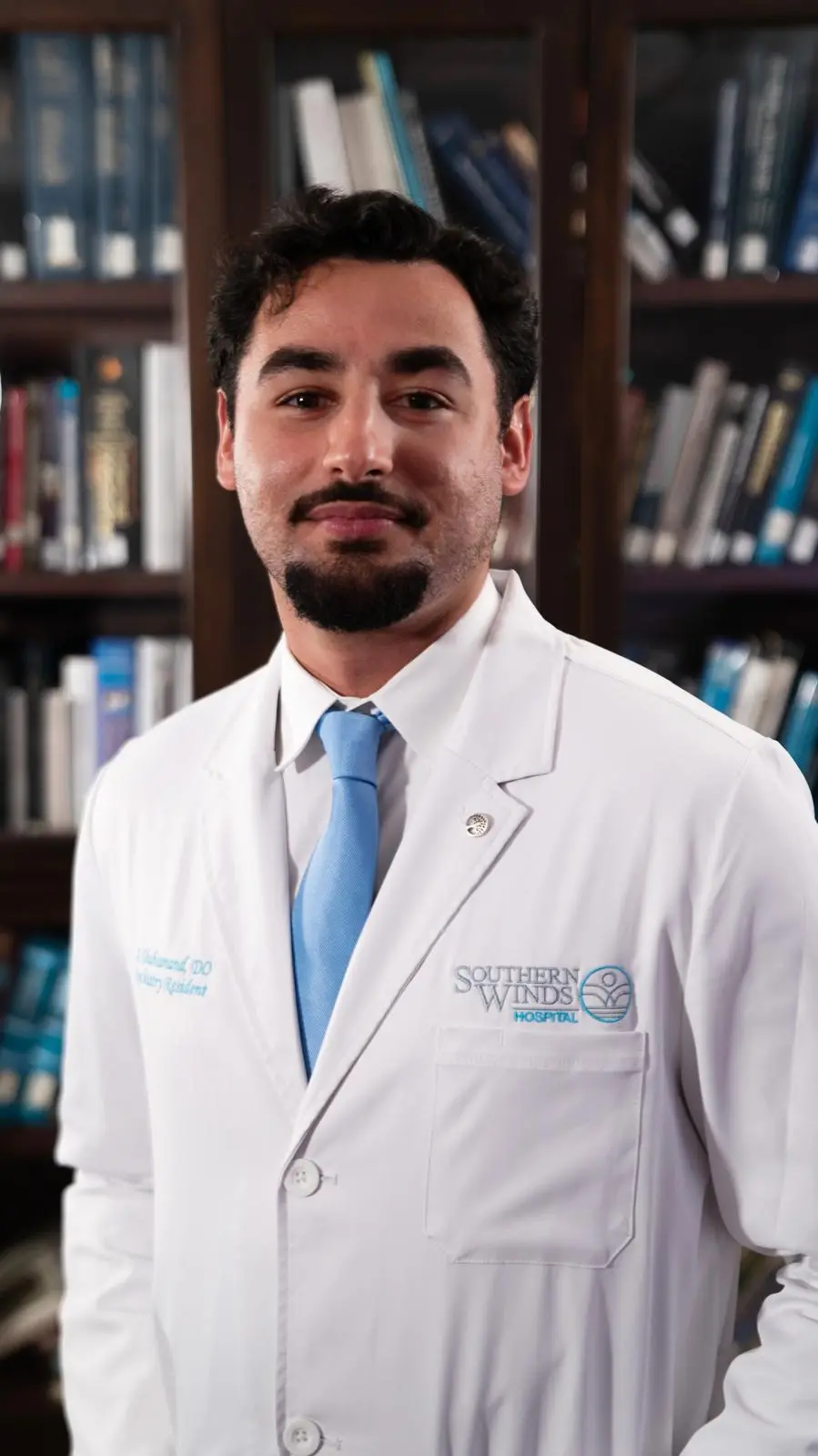
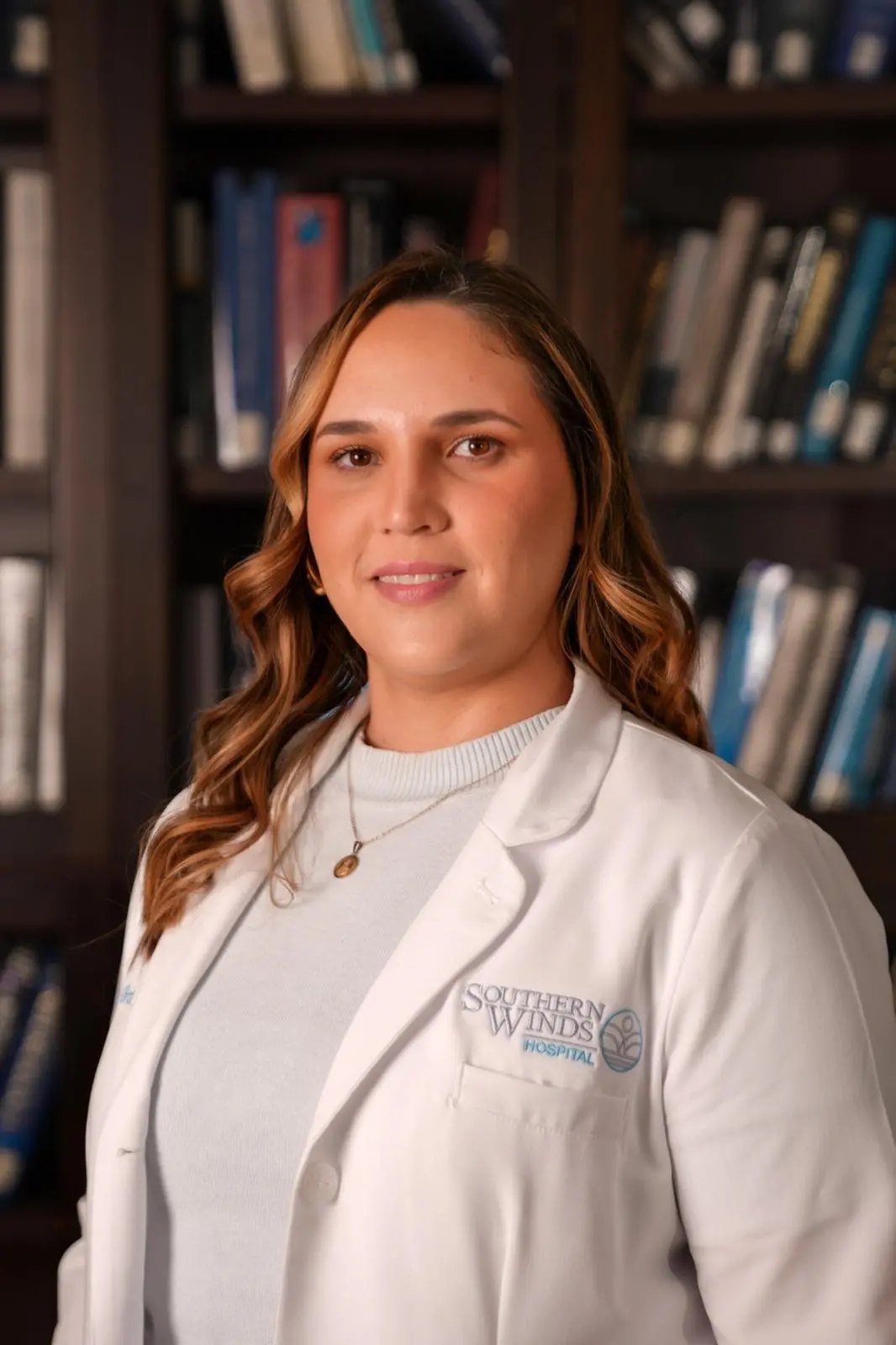
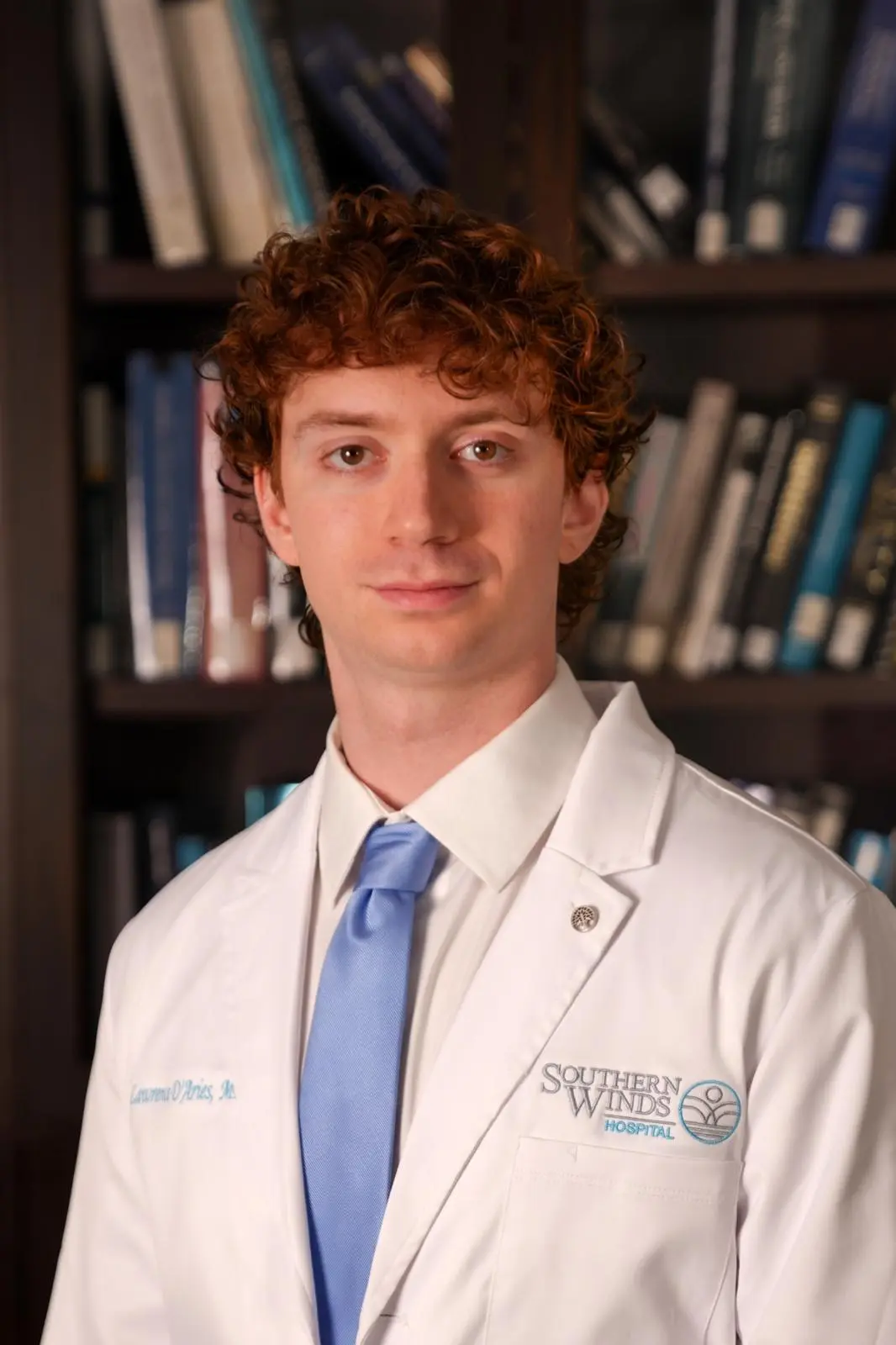
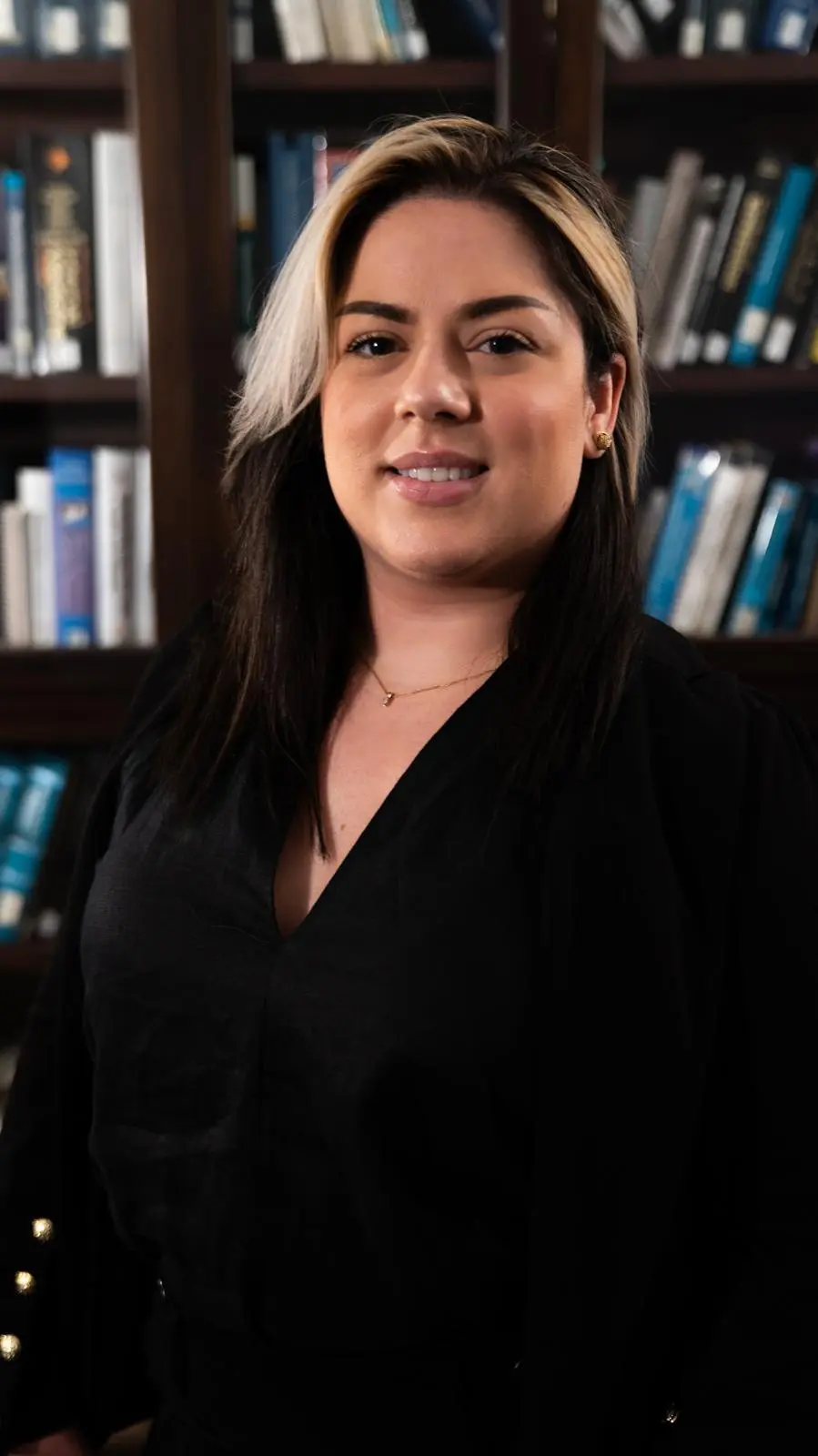
About Me
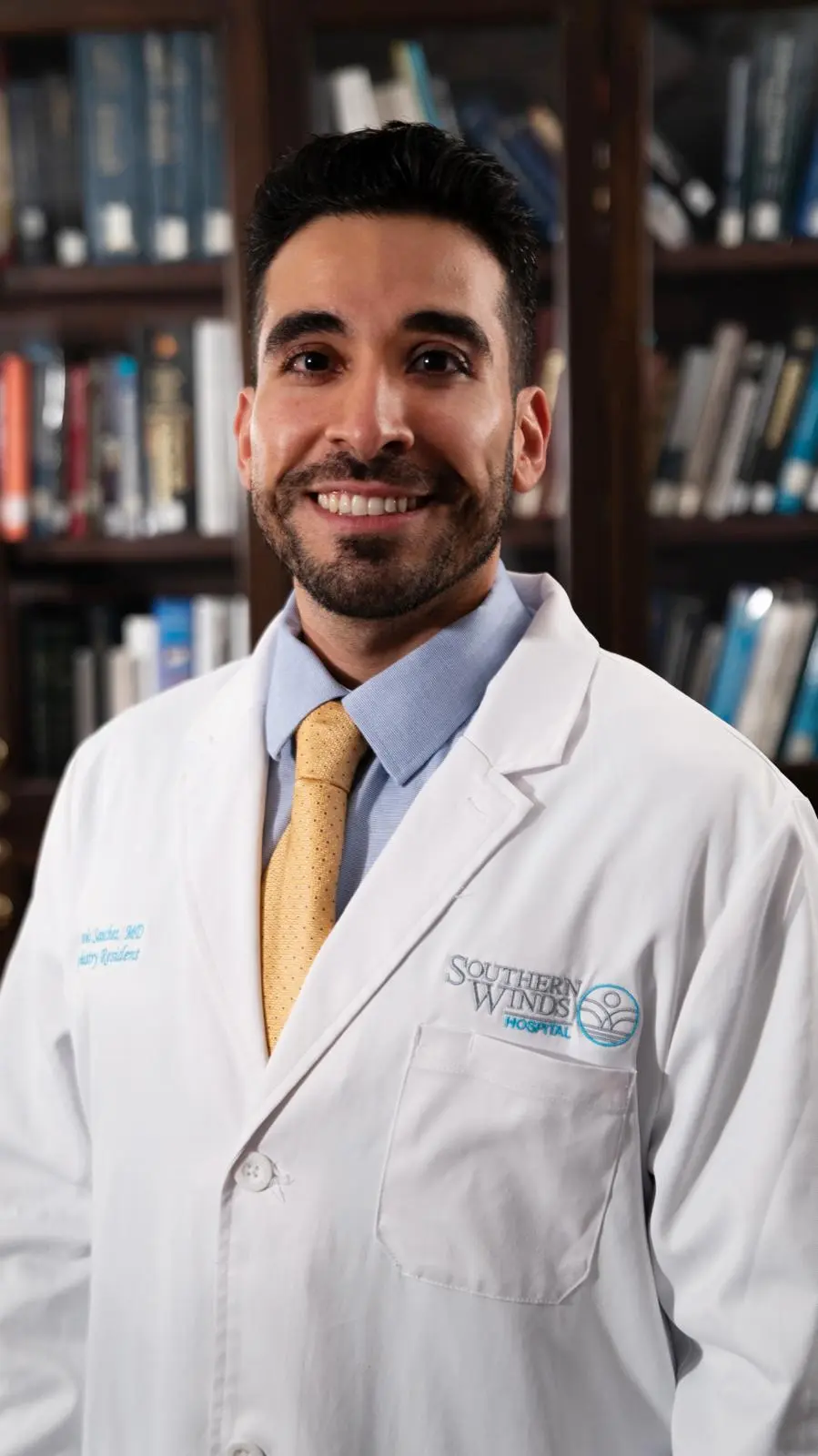
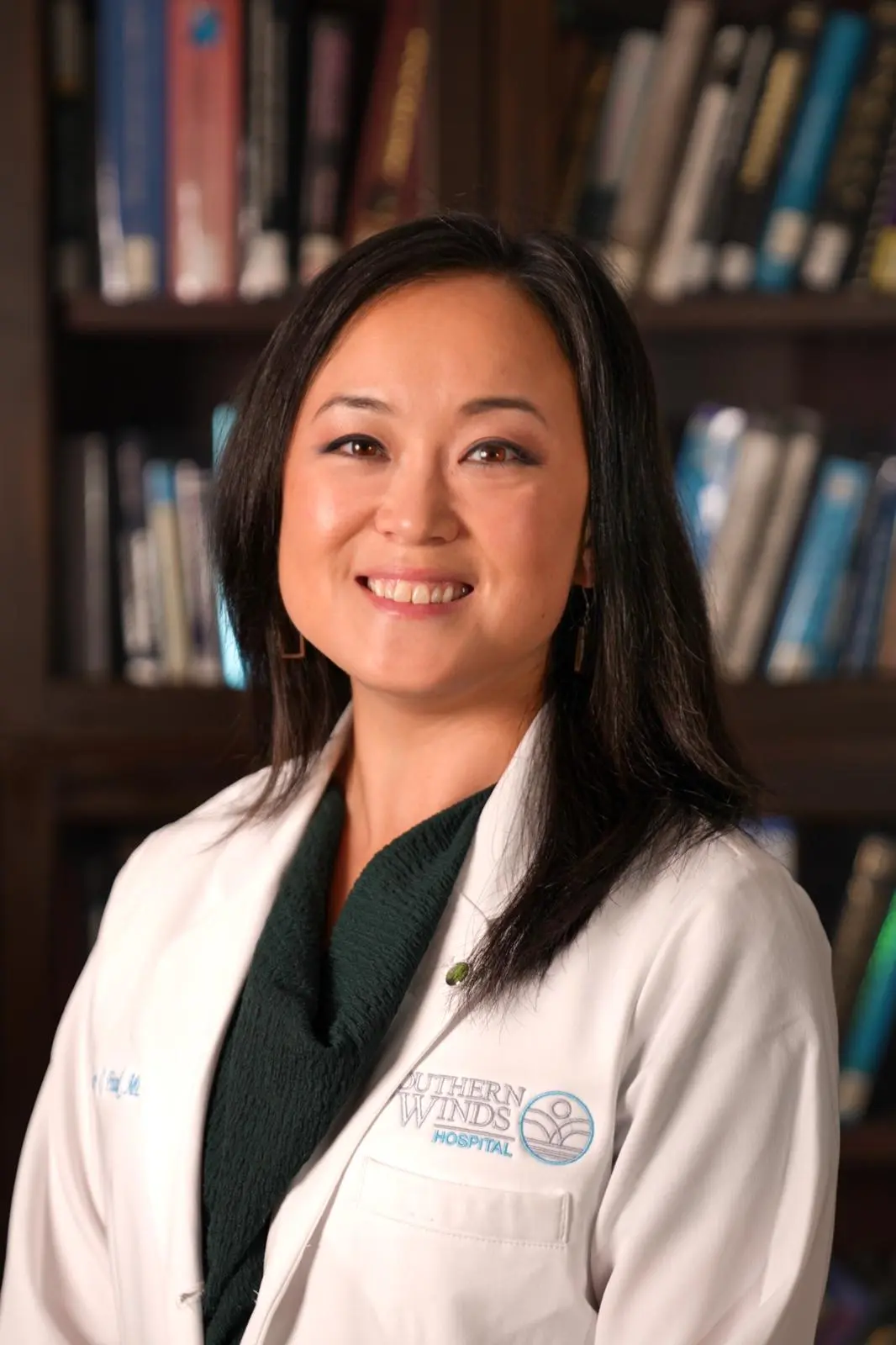
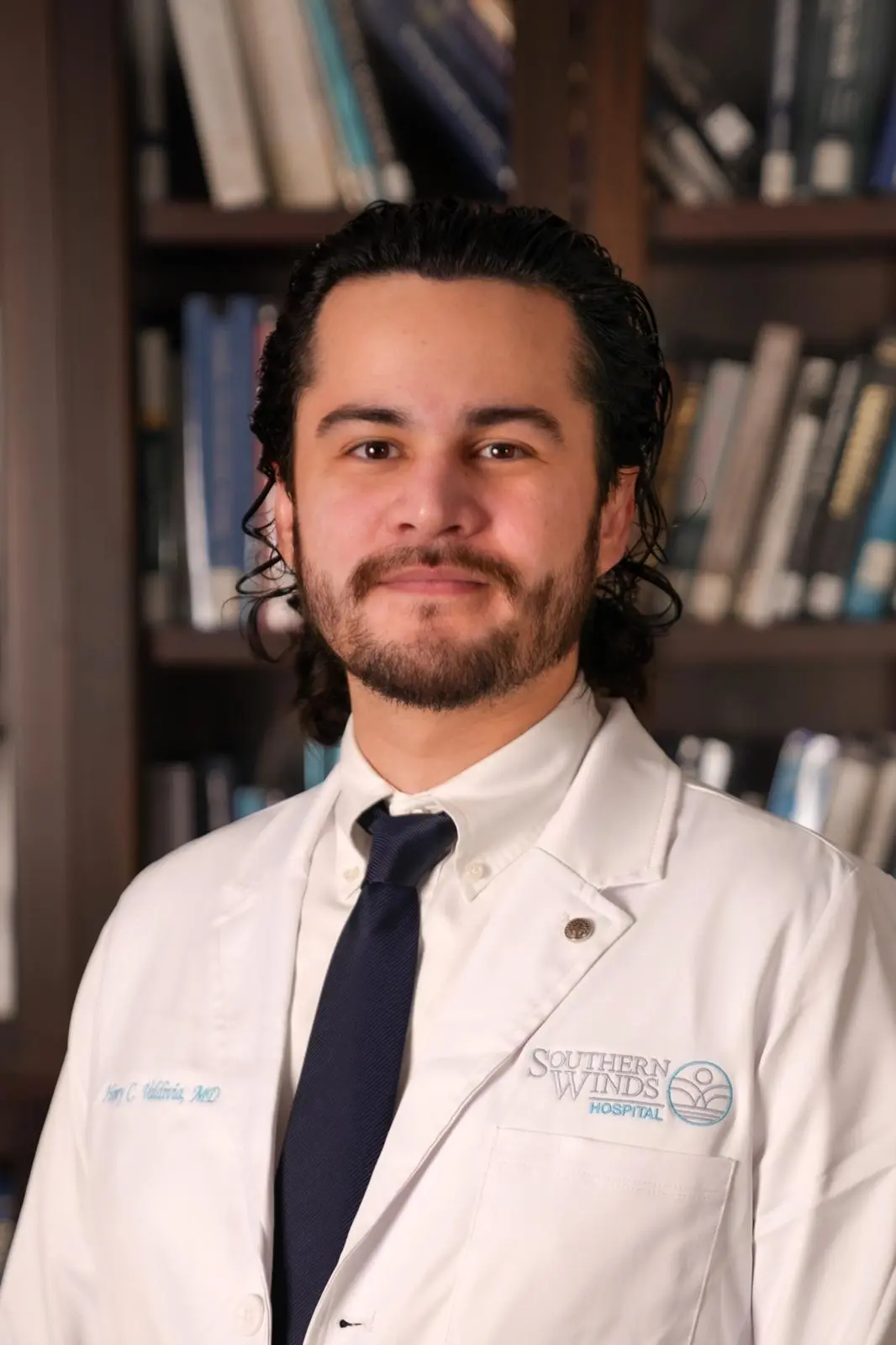
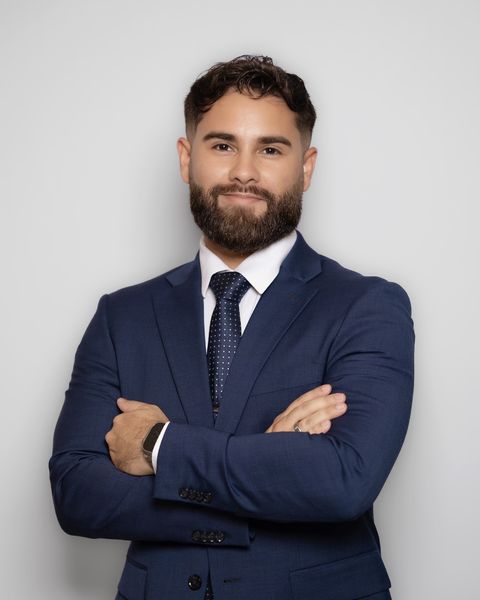
I am from Santo Domingo in the Dominican Republic, and I completed
medical school at Instituto Tecnológico de Santo Domingo (INTEC).
Outside of medicine you will find me playing tennis, cooking,
traveling, and cross-stitching — and apparently knowing more
scientific plant names than most psychiatrists should.
Why Southern Winds?
I chose Southern Winds because of the welcoming, family-oriented
environment I experienced here. I wanted a residency where I could
receive strong clinical training while being part of a close-knit
community of residents and faculty.
As I have progressed through residency, one of the things I have
valued most is having the opportunity to grow alongside the program
itself. Now, as a PGY-4 Chief Resident, I get to contribute to that
process in a completely different way. I am able to represent the
resident perspective, work closely with program leadership, and help
make improvements that will benefit both our current residents and
the classes that follow us.
A Day in My Life as Chief Resident
One thing I have learned as Chief Resident is that there really is no
typical day.
I am still a PGY-4 psychiatrist in training, so my clinical education
and patient care remain an important part of my day. But Chief year
has also allowed me to see an entirely different side of residency. I
now spend part of my time working alongside our residents, faculty,
and program leadership to help coordinate the day-to-day structure of
the program.
Some days that means helping with schedules or resident coverage.
Other days it means checking in with residents, communicating
concerns to leadership, working through an unexpected problem, or
helping organize something that will make the program run more
smoothly.
And then there are the inevitable fires.
Part of being Chief is becoming the person who gets a call when
something does not go according to plan. I have learned how to listen
to different perspectives, communicate effectively, and find solutions
that work for the residents while also considering the needs of the
program.
Because Southern Winds is still a relatively young and growing
residency, I think my experience as Chief has been especially unique.
We are not simply inheriting systems that have existed for decades. We
have opportunities to look critically at how we do things, identify
what can be better, and actually help build the structure of the
program.
That has probably been my favorite part of Chief year. I have been able
to learn the administrative side of graduate medical education while
still being closely connected to the residents experiencing the program
every day.
My goal is pretty simple: leave the program better than I found it.
Whether that means solving a small problem for a resident, improving
communication, helping create a better system, or contributing to a
larger change, there is always something we can improve.
What I've Learned as Chief
Being Chief has shown me how much happens behind the scenes to make a
residency successful. It has also taught me that building a strong
program is rarely about one big change. It is usually the result of
many small decisions and improvements made consistently over time.
I have also learned how important it is for residents to feel that
they have a voice. I want my co-residents to know that they can come
to me with a problem, an idea, or even just something they think we
could be doing better.
Being able to advocate for them while working collaboratively with our
leadership has been one of the most valuable experiences of my
residency.
Looking Ahead
My interests include geriatrics, academics, and research, and I hope
to continue incorporating those areas into my career after residency.
Chief year has also given me a new appreciation for medical education
and mentorship. There is something rewarding about watching junior
residents become more confident physicians and knowing that I had a
small role in helping them along the way.
My Advice to Applicants
When you interview for residency, pay attention to more than the
rotation schedule. Ask yourself whether the residents seem comfortable
with one another, whether they feel comfortable speaking with
leadership, and whether you can picture yourself being part of that
environment for four years.
Southern Winds has given me the opportunity not only to become a
psychiatrist, but also to become a leader and help shape the program
itself.
As Chief Resident, I now get to help create the kind of residency
experience that I would want for the residents coming after me.
Why Southern Winds?
What I love most about Southern Winds is the balance between strong
clinical training, supportive faculty, increasing autonomy, and a
healthy work-life balance.
I have also had the opportunity to participate in national research
conferences, leadership positions, and professional summits during my
time here. These experiences have allowed me to grow both personally
and professionally, expand my interests within psychiatry, and connect
with others who share my passion for the field. Together, these
opportunities have made Southern Winds a place where I feel supported
not only in becoming a better psychiatrist, but also in developing as
a professional and as a person.
A Day in My Life as a PGY-3
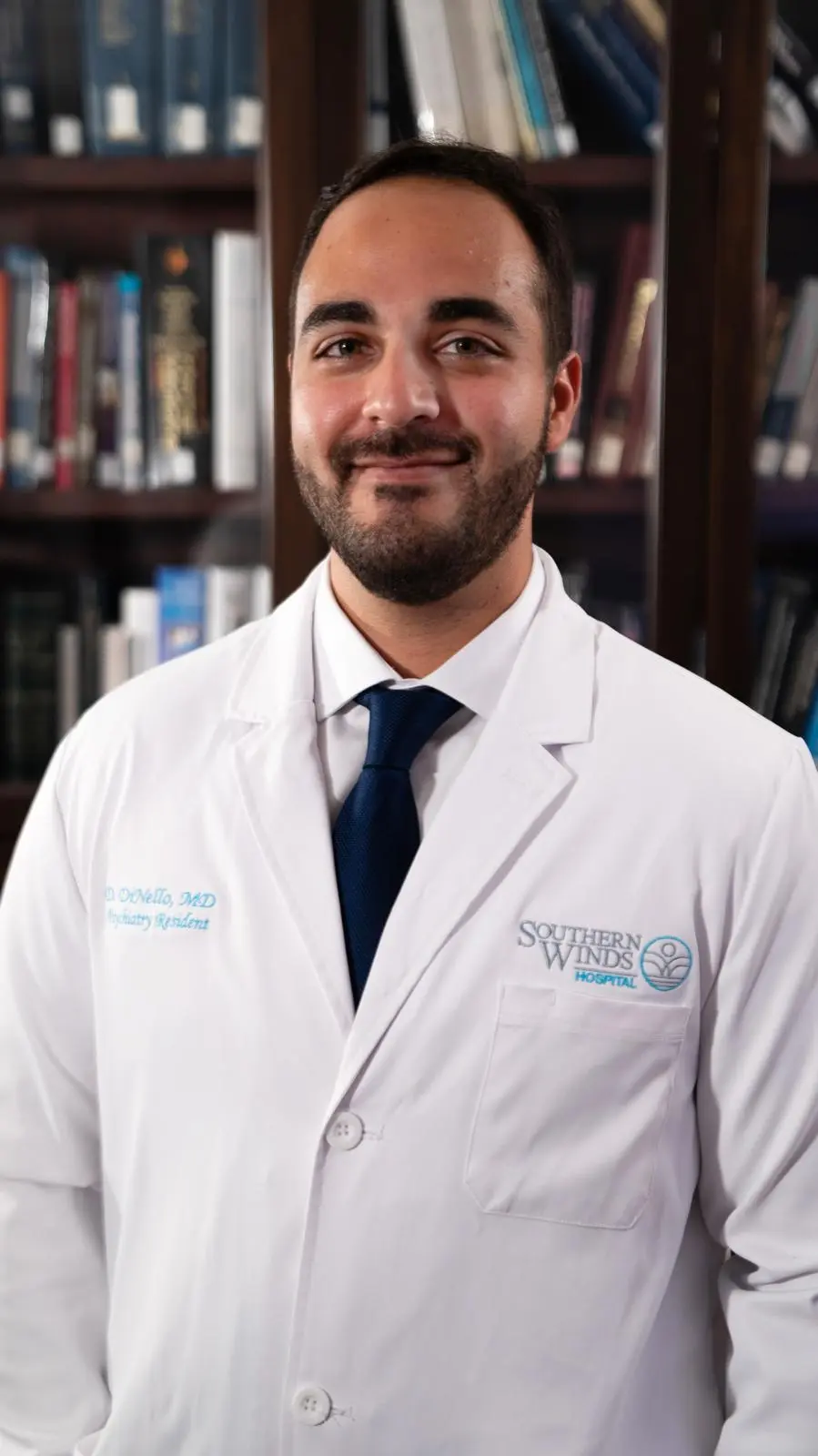
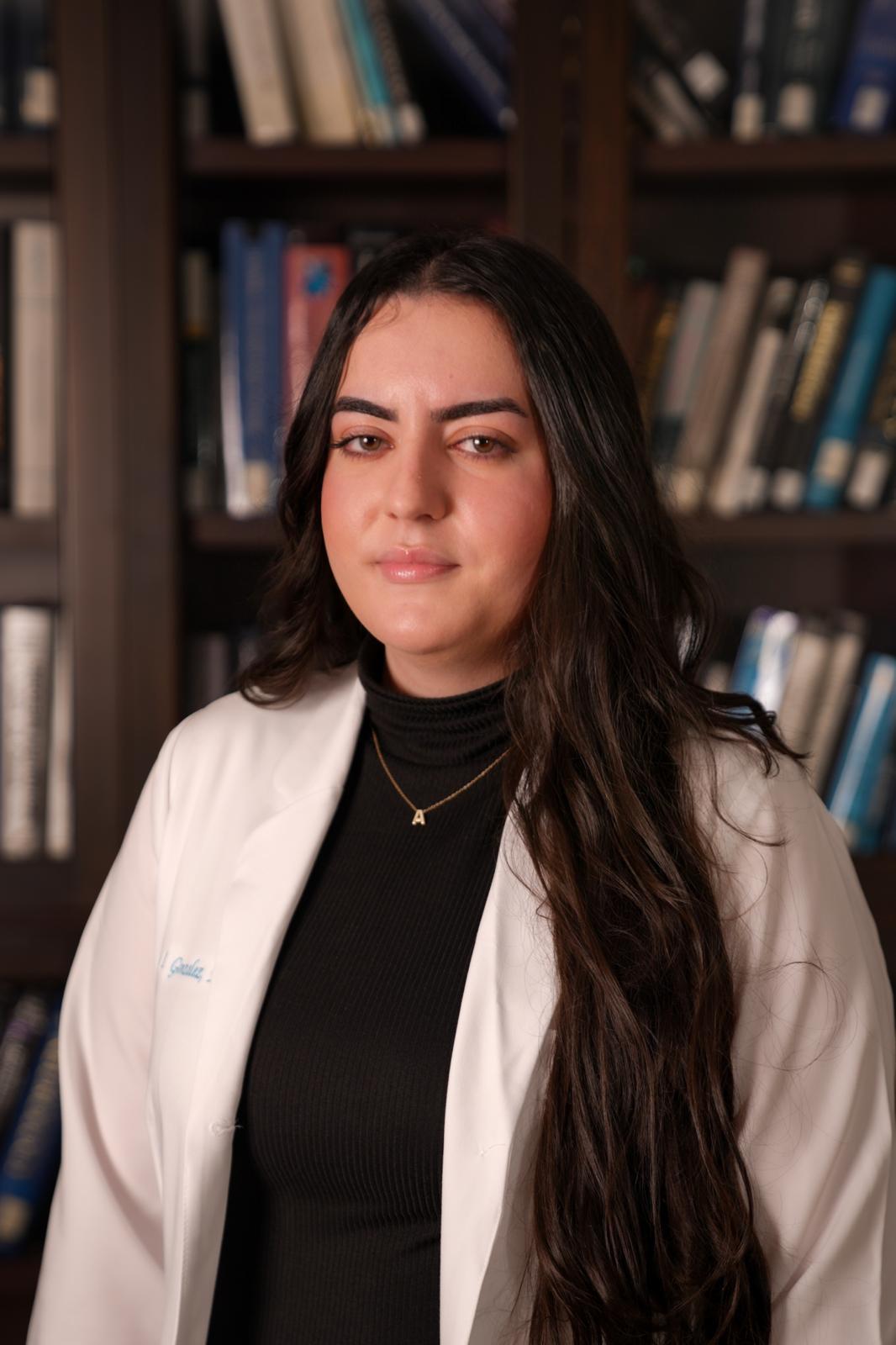
As a PGY-3, I currently spend my days in outpatient psychiatry. I
usually wake up around 8 AM and head to clinic around 9 AM, where I
spend the day seeing my outpatient patients until 5 PM.
One of my favorite parts of outpatient psychiatry is getting to know
patients over time and seeing their progress throughout treatment. It
has been rewarding to have more autonomy in my clinical
decision-making while continuing to learn from my attendings.
Where I Live
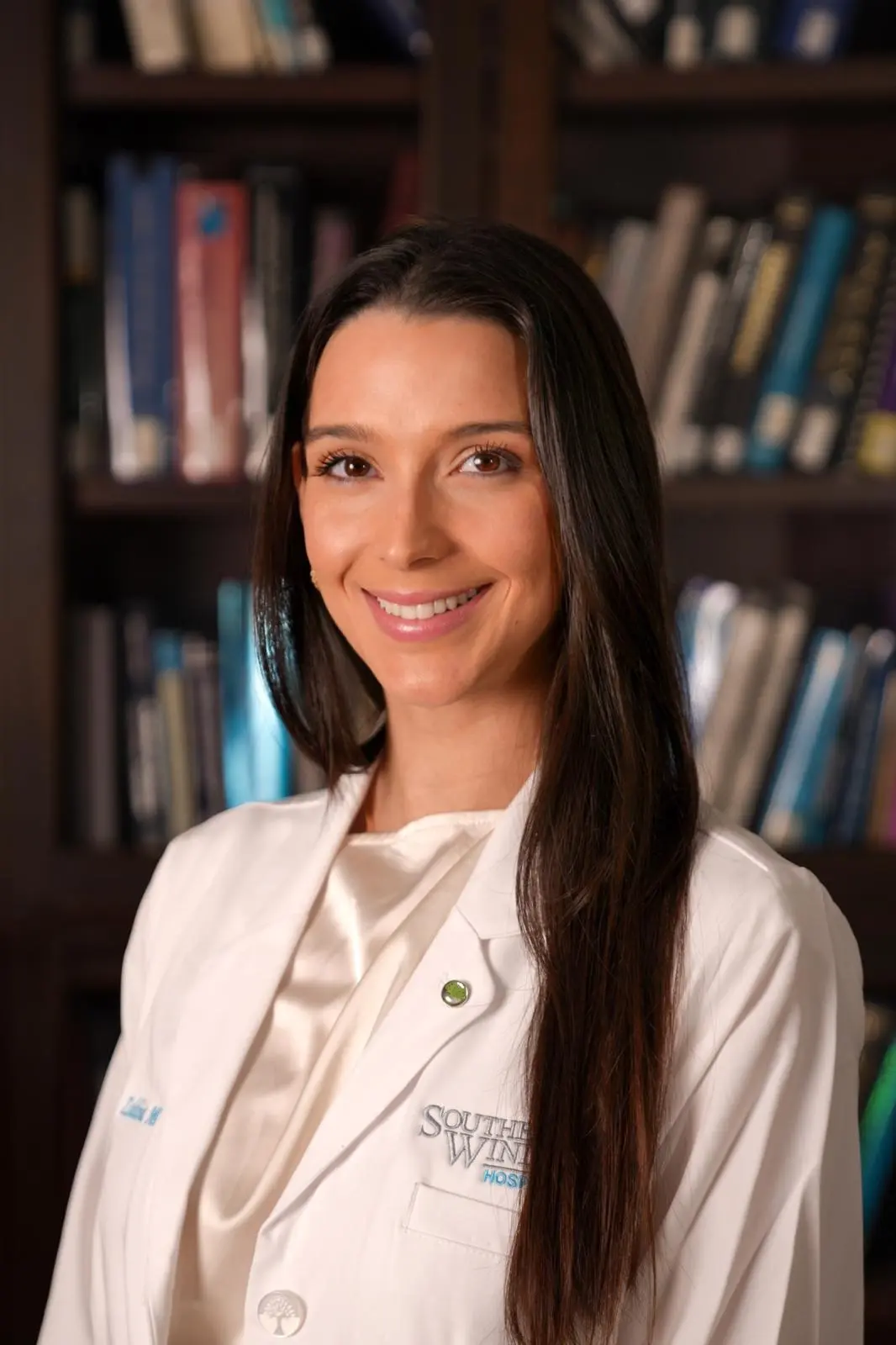
I live in Brickell, one of the main urban neighborhoods in Miami, and
my commute to the hospital is about 25 minutes. I love being close
enough to the hospital while also being in the heart of the city.
Life Outside the Hospital
Miami is a great city with a unique mix of cultures, food, people, and
experiences, and I feel very lucky to call this city home. I love the
warmth, diversity, energy, and culture. One of my favorite things
about living in Miami is that there is always something to do. Outside
of residency, I love going to Pilates, shopping, and spending time
with my friends, family, partner, and dog.
Final Thoughts
Looking back, moving to Miami for college was one of the best
decisions I have made. I found a city that I love and, through
Southern Winds, a residency program where I have been able to grow as
a psychiatrist while still enjoying the life outside of medicine that
makes me who I am.
For me, Southern Winds has been a place where I can take on meaningful
clinical responsibility, continue developing my independence, and know
that I have a supportive community behind me.
My Journey to Psychiatry
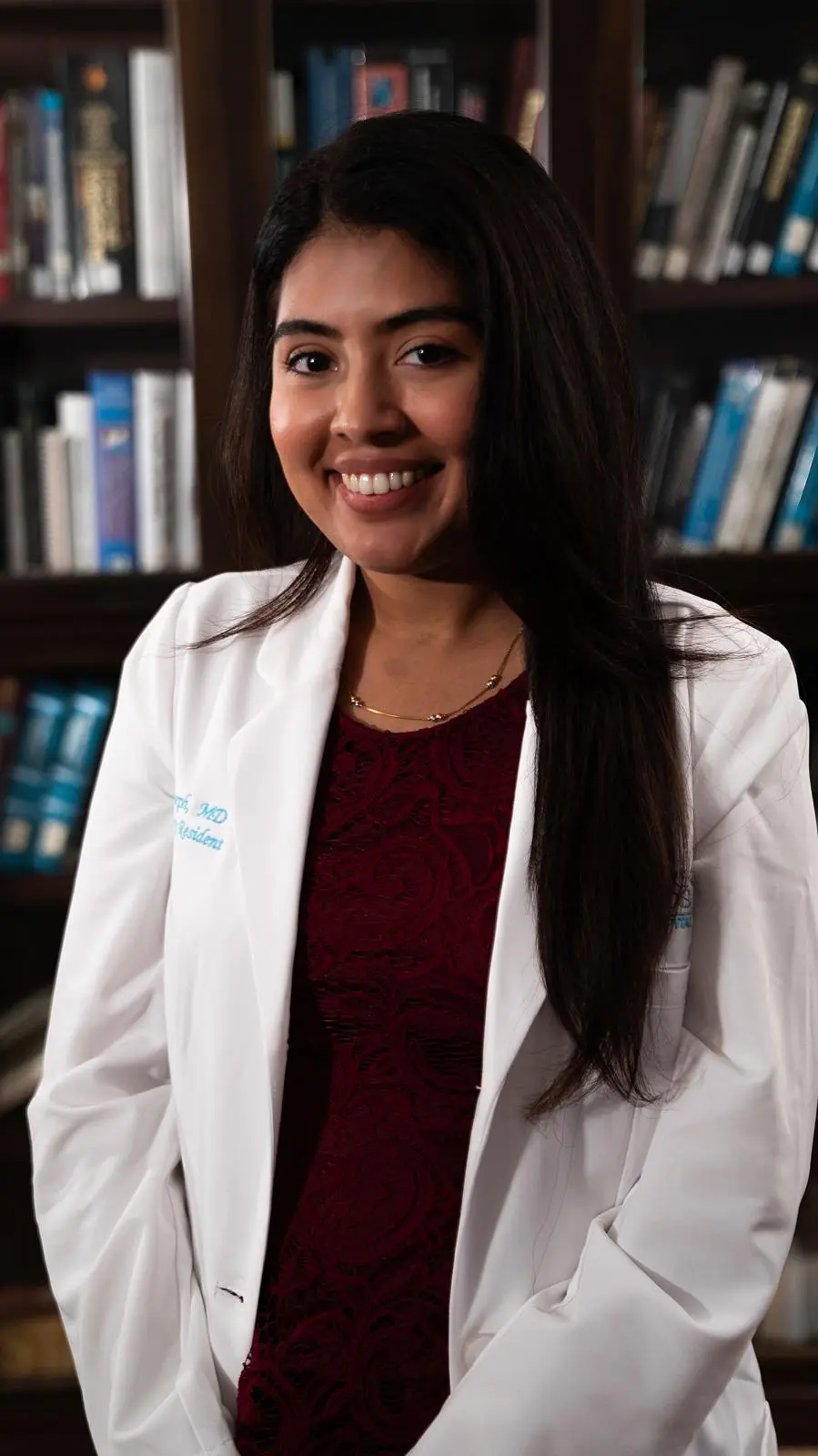
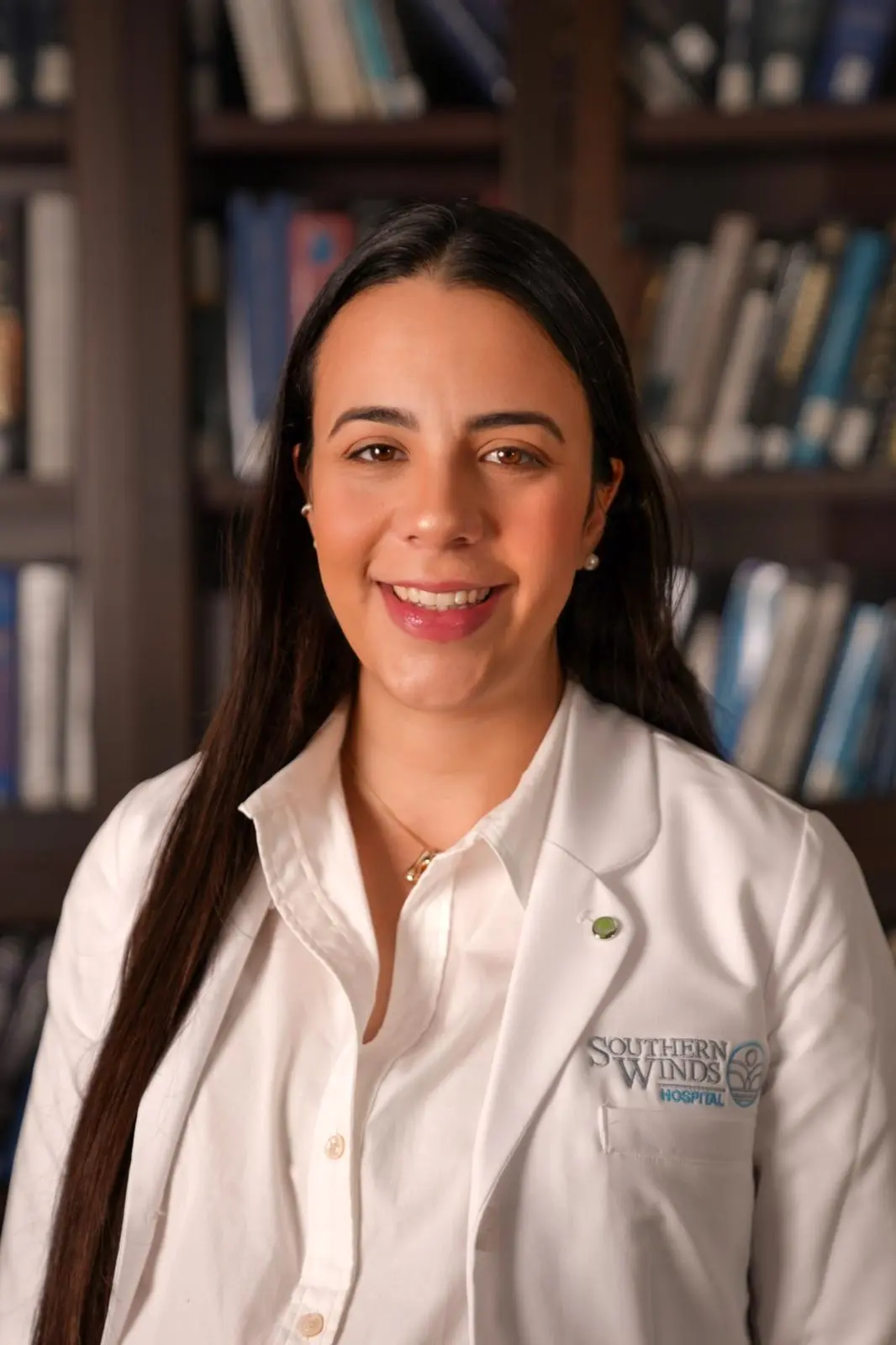
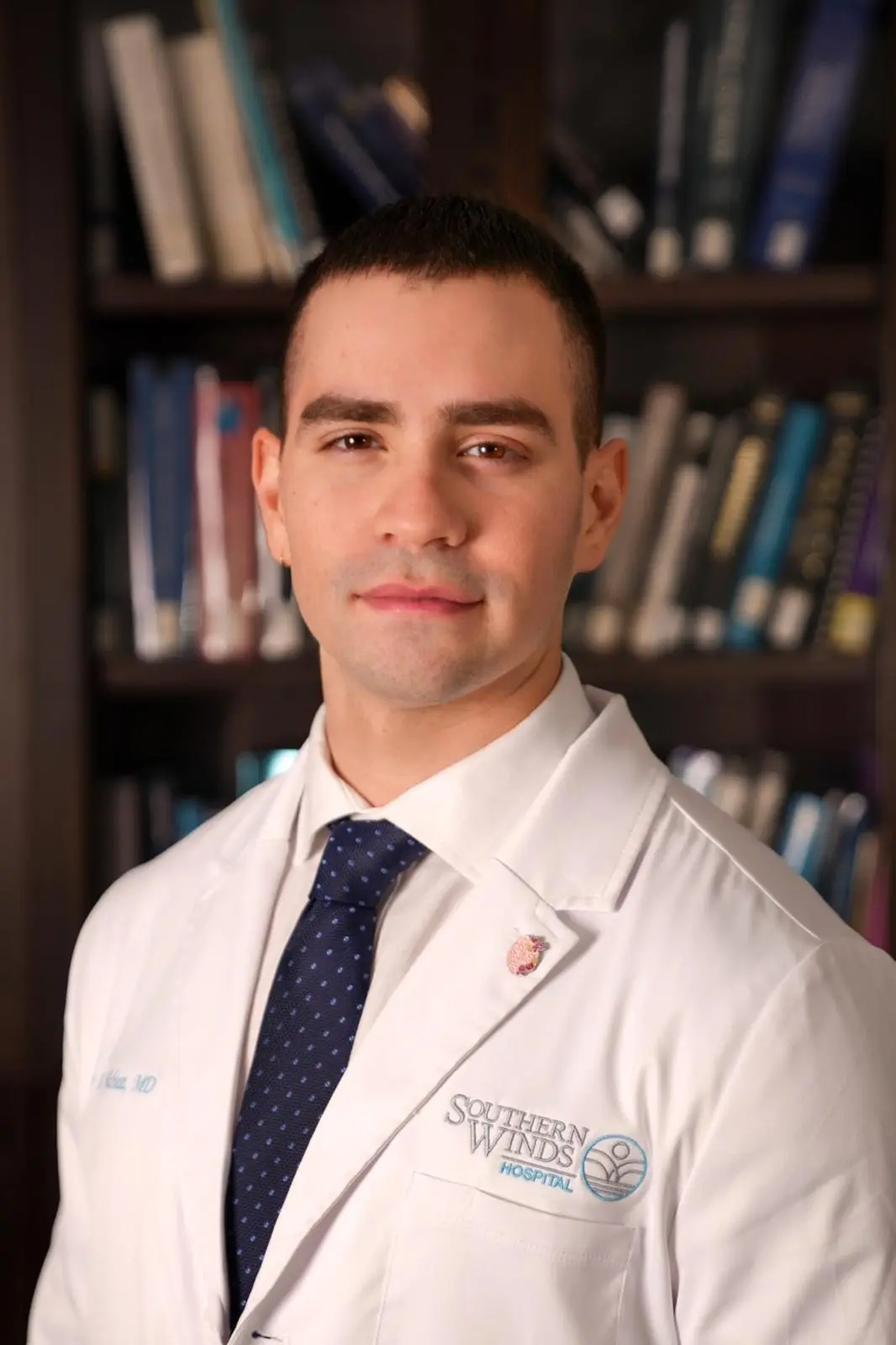
I was born and raised in Puerto Rico, and in 2016, I moved to the
Dominican Republic to attend Universidad Iberoamericana (UNIBE) and
pursue my dream of becoming a physician. Moving away from home for
medical school was an important part of my personal and professional
growth. During medical school, I became involved in several
leadership and community service initiatives through organizations
such as AMSA and Honey Heart. I helped organize medical outreach
activities, fundraising efforts to support school infrastructure, and
projects focused on incorporating mental health education into school
curricula. These experiences strengthened my belief that medicine is
most meaningful when we understand not only the patient in front of
us, but also the community and circumstances that shape that person's
health.
I became interested in psychiatry early in medical school, drawn to
its uniquely humanistic approach to medicine. I believe that, in an
increasingly technological and data-driven field, there is something
especially important about preserving the human connection at the
center of healthcare. In psychiatry, we often cannot rely on an
imaging study or laboratory test to tell us what a patient is
experiencing. We have to listen, observe, and take the time to
understand the person as a whole — their mind, their history, their
relationships, and the experiences that have shaped them.
At the same time, psychiatry is deeply grounded in science.
Understanding neurobiology, pharmacology, and evidence-based
treatments is essential to providing excellent care. What makes the
field particularly meaningful to me is that it asks us to bring that
scientific knowledge together with the human story. Psychiatry sits
at a unique intersection of medicine, neuroscience, philosophy, and
the humanities, allowing us to treat illness while never losing sight
of the person experiencing it. That balance is what ultimately made
psychiatry feel like the right path for me.
Why Southern Winds?
When I began looking for residency programs, Miami immediately felt
familiar. Coming from Puerto Rico, the weather, culture, and
lifestyle made South Florida feel close to home. But my decision to
join Southern Winds became about much more than location.
During my observership, I had the opportunity to experience the
program from the inside, and what stood out to me was the sense of
community. I saw residents who genuinely supported one another and
faculty who were approachable and invested in teaching. That
experience made it easy to picture myself here.
Now, as a PGY-2, I can say that the supportive environment I saw
during my observership has been one of the most valuable parts of my
residency. Our Program Director, Dr. Oms, is approachable and
understanding, and Dr. Pinchinat has been an important guide and role
model throughout my training. Our faculty are accessible when
residents need guidance while also giving us the autonomy to develop
confidence in our clinical decision-making.
One of the strengths of Southern Winds is the combination of strong
clinical exposure, supportive supervision, and work-life balance.
Residents have opportunities to take on increasing responsibility
while knowing that help is available when needed. The program also
provides resources that make studying and preparing for exams easier,
including access to a dedicated question bank.
For me, Southern Winds offers something that is difficult to
appreciate fully until you experience it: a program where you can
work hard, become a stronger psychiatrist, and still enjoy being a
person outside of the hospital.
A Day in My Life as a PGY-2
I am currently on our ER day rotation, working from 7 AM to 7 PM. My
responsibilities include evaluating patients for psychiatric
admission, determining whether they meet admission criteria, managing
walk-ins, and helping supervise PGY-1 residents while working
alongside our attending physicians.
The ER naturally has busy periods and quieter periods depending on
patient volume. One perk of the rotation is that during quieter
moments, residents have the flexibility to use their time
productively. Since I have already completed Step 3, I often use this
time for PRITE preparation, completing questions from our
program-provided question bank, and reviewing concepts with
flashcards.
I usually study in the on-call room, which has its own workstation
separate from the residents' lounge. It is a quiet space where I can
focus when I have downtime. We have lunch around noon, and afterward
I may return to studying or jump back into admissions depending on
what is happening in the ER.
I think this rotation is a good example of the balance I have
appreciated throughout residency: we are given meaningful clinical
responsibilities and opportunities to grow, while the program also
recognizes the importance of having time to learn, study, and
recharge.
Where I Live
I live in Pembroke Pines, north of the hospital, and my commute is
usually around 25 minutes. One of the things I really appreciate
about Southern Winds is that the hospital is centrally located in
South Florida, making it convenient not only for commuting but also
for accessing our other clinical sites, including Nicklaus Children's
Hospital.
The location is also a major advantage for life outside of residency.
From the hospital, residents have easy access to different parts of
Miami, Broward, and everything South Florida has to offer.
Life Outside the Hospital
As an island girl, I am naturally drawn to the beach. South Florida
gives me the warm weather and ocean that remind me of Puerto Rico
while also giving me plenty of opportunities to explore somewhere
new.
Some of my favorite experiences have been with my co-residents. We
have gone to Pilates classes, planned spa days, gone out for brunch,
and spent days on a boat together. In fact, our first informal
resident gathering happened on a boat before orientation week even
started, which turned out to be a pretty good preview of the group I
was joining!
I think those experiences say a lot about the culture at Southern
Winds. The relationships between residents extend beyond the
hospital, and having people you genuinely enjoy spending time with
makes a big difference during residency.
Final Thoughts
My advice to medical students going through the Match is to look
beyond the curriculum and rotations when evaluating programs. Pay
attention to the people. Notice how residents interact with each
other, how comfortable they are approaching faculty, and whether the
environment feels like one where you can see yourself growing.
Residency is a major part of your life, so finding the right
environment matters. You want a program that will challenge you
clinically, give you increasing autonomy, support you when you need
it, and still allow you to have a life outside of medicine.
That is what I have found at Southern Winds. The clinical exposure
has helped me grow, the faculty have supported me along the way, and
the residents have made the experience feel like a true community.
For anyone looking for a psychiatry program that combines hands-on
training, approachable faculty, strong resident support, a convenient
location, and a genuine work-life balance, I think Southern Winds is
a program worth getting to know.
My Journey to Psychiatry
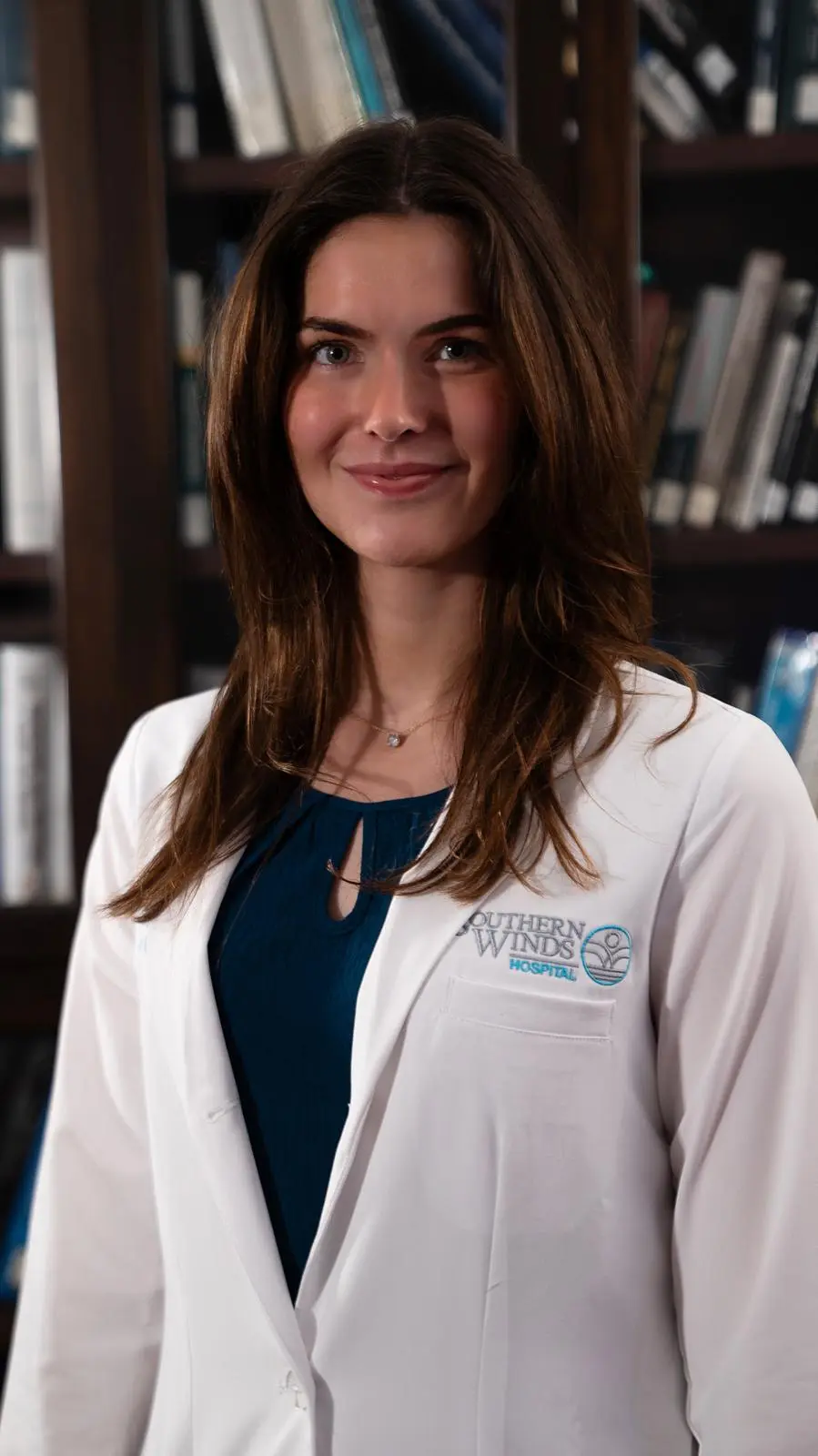
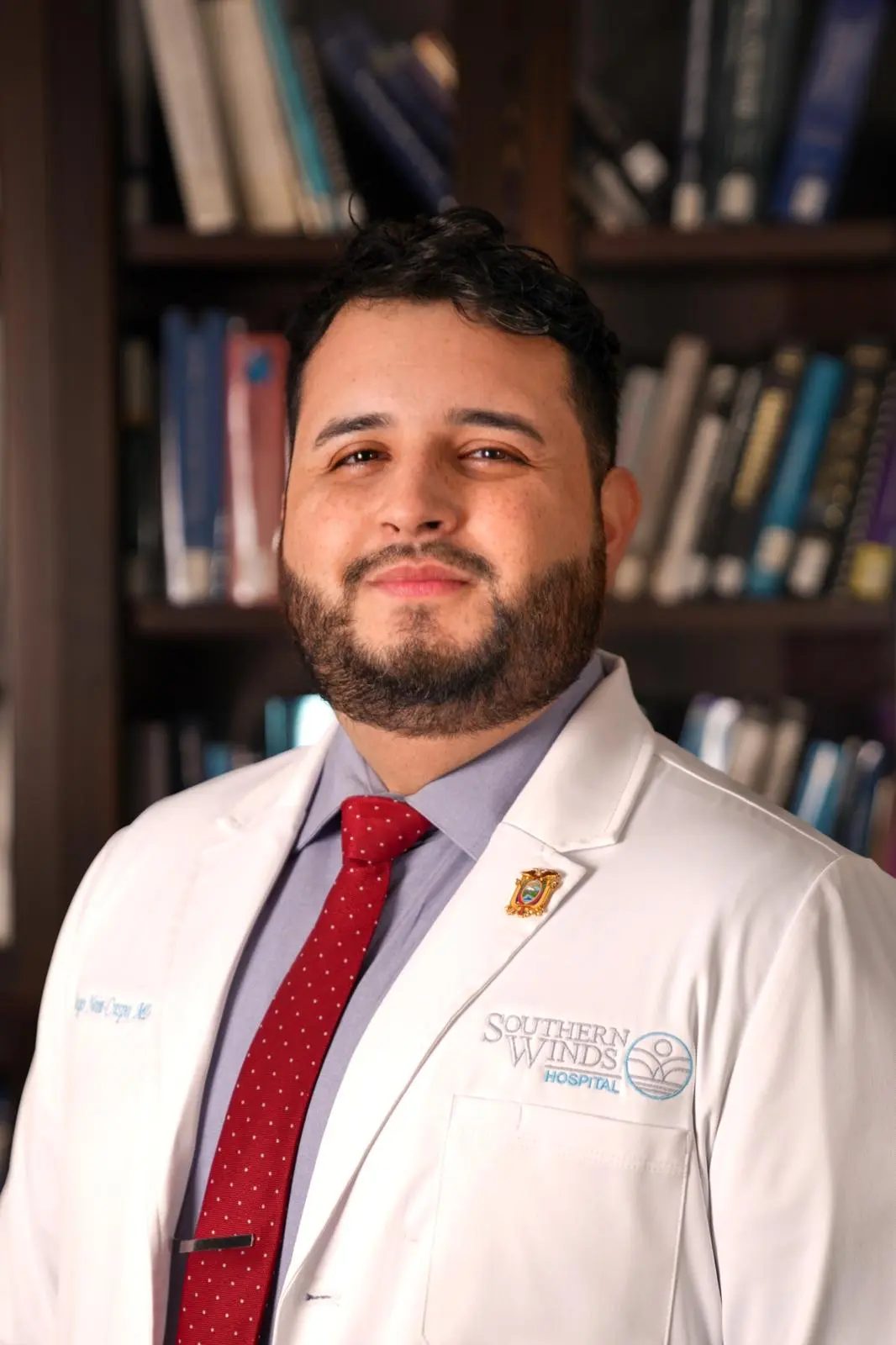
I was born and raised in Peru, where I attended medical school and
later completed a year and a half of psychiatry residency training
before continuing my medical journey in the United States. Having the
opportunity to experience psychiatry in different healthcare systems
has only made me more certain that this is where I belong.
I chose psychiatry because I believe mental health is fundamental to
how we live, connect with others, and function in the world. We can be
physically healthy, but when our mental health is suffering, every
other aspect of life can be affected.
I also want to be part of breaking the stigma that still surrounds
psychiatric care. Seeking help should never make someone feel weak,
different, or as though they do not belong in society. To me,
psychiatry means seeing the person beyond the diagnosis, helping
patients regain their quality of life, and reminding them that their
illness does not define who they are.
Resilience has been an important part of my own journey, and I hope to
bring that same sense of possibility to my patients. I want to be part
of the change and, above all, bring hope.
Why Southern Winds?
I first came to Southern Winds as an observer, and what immediately
stood out to me was the positive environment. There was a genuine
sense of community not only among the residents, but also between
residents and attendings. Our attendings are approachable, receptive,
and passionate about teaching, which creates an environment where you
feel comfortable asking questions and learning.
Now, as a resident, I appreciate how much we learn directly from our
attendings and how open everyone is to new ideas. As a relatively
young residency program, there is something exciting about having the
opportunity to grow with it, get involved, and contribute to making
our program even better.
A Day in My Life as a PGY-1
One of the things I enjoy most about being a PGY-1 is the variety. We
rotate through different specialties and clinical settings, allowing
us to learn from different perspectives and continuously build our
clinical skills.
I especially enjoy our didactics because we are not only learning from
our attendings and senior residents, we also have the opportunity to
teach. We regularly prepare and present high-yield topics, develop our
presentation skills, and receive feedback and guidance from senior
residents and attendings. Everyone is very receptive, which makes it
an environment where we can ask questions, exchange ideas, and
continue improving together.
I also value being able to incorporate wellness into residency. We are
here to work hard and become better physicians, but taking care of our
own mental health matters too. Creating space for wellness reminds us
to practice the same principles we encourage in our patients.
Life Outside the Hospital
Outside of medicine, dancing is one of my biggest passions, especially
salsa and bachata. I also love traveling, exploring Miami, trying new
places, and creating content on social media.
For me, residency is about becoming the psychiatrist I want to be
while continuing to grow as a person and enjoying the journey along
the way.